Lecture Themes Revision- week 2
Week 2 Lecture Themes Revision
Jessica Broughton
Notes from recap lecture:
Values
Definitions:
Conspicuous and inconspicuous consumption (Veblen) the spending of money on and the acquiring of luxury goods and services to publicly display economic power—of the income or of the accumulated wealth of the buyer
Cultural Capital (Bourdieu) Non-financial or social assets that promote social mobility beyond economic means, e.g. education, dress, physical appearance, style of speech
Virtue Signalling (James Bartholomew popularised the term) Publicly expressing opinions or sentiments intended to demonstrate one’s good character, or the moral correctness of one’s position on a particular issue, e.g ‘I hate fox news’
- Spatial inequality
- Jane Jacobs and community centred approach to city planning
- William Whyte and the power of observation: studied public spaces, ‘street life project’, ‘science of cities’- his approach to urban informatics
- Atmospheres can be evoked through drawing
Value/Values/Consumption/Cultural Capital
- Karl Marx- ‘Nothing can have value without being an object of utility’- Is that still true?
Yes, to an extent- we measure the value of something based on the use it can have to us. The value of things has changed with time along with our varying needs of objects and things.
Adam Smith ‘You need water to live but you can’t buy something with water’- It has utility. ‘A diamond won’t keep you alive but you can trade it’ Why?
The value placed upon a diamond is disproportionate to water because we acknowledge it’s value in correlation to its rarity. Water, in this part of the world is in abundance and we need only turn on a tap.
Bourdieu: Cultural capital is:
- Accumulation skills, to demonstrate competence
- 3 sources: objective, embodied, institutionalised
- OBJECTIVE: Cultural goods, works of art
- EMBODIED: Language, mannerisms, preferences
- INSTITUTIONALISED qualifications, education credentials
- Collecting, curating, nostalgia
- Curate, select, organise, take care
- Endowment effect, valued more once we own them
Wemer ‘Muensterberger’- Compensatory behaviour where every new object gives notion to fantasied omnipotence
- We often get a great hit out of buying and accumulation of things
-Cabinets of curiosities, precursors to museums
LUXURY difference between what you need and what you want
- Language of Luxury is bespoke, tailored, individual, crafted, tradition, heritage, time
- Luxury doesn’t meet a need or solve a problem
Experience economy- buying experiences
Conspicuous consumption- People will know where you bought
Drawing- Patrick Caulfield, Michael Craig Martin
Jane Jacobs- Challenging modernism
- Structure of cities- closer when considering conditions that generate diversity
Henri Lefebvre- ‘Right to the city’
Groups now look at it as a call to councils to reclaim city as a cocreated space, social interaction
Spatial inequality- unequal distributions of resources depending on area/location
‘Medical, welfare, housing’.
READINGS
Walter Benjamin- Illuminations
A shorter article on the topic: https://www.archdaily.com/771939/the-long-ish-read-walter-benjamin-unpacking-his-library
Response:
In his writing about unpacking his library, Benjamin describes the nature of a collector: “Every passion borders on the chaotic, but the collectors passion borders on the chaos of memories.” Through discussion of habitual behaviours, such as the way he would like to display and categorise, Benjamin reveals to the reader the personal experience of collecting and what it can mean to the individual. This is a true example of The Endowment Effect, and perhaps the chaos of collecting and entwining with memories reinforces the value of a collection as it grows.
Specifically referring to books, he describes the experience of purchase as a collector and how it differs to that of a student buying a textbook. The pride he has when describing how it is different suggests his belief that it is superior to the average book procurement experience, and maybe even virtue signalling if not merely conspicuous consumption.
Returning to study online- transition week 1
We are using Microsoft teams and to get the most out of the platform, tutors have set us different tasks. For history and theory this week, we were assigned the bellow task. There is a box to tick when the assignment is complete, which I have done late- having seen the below task somewhere and spent my time looking for it on my emails and moodle. Below the task, the screens hot shows where I have left my assignment- as you can see, its hard to find!
My goal is to continue sharing everything that I have done here as I am not the fastest at adapting to technology so it would be good to have a visual record of how I got here!
1.Go to the libarary, (https://www.arts.ac.uk/students/library-services).
2.Access the Library Search link.
3. Find and share 3 links to books/journals that you think will be useful for your peers, to support the Studio Unit. You might search for a book or article on Digital consumption, Ethics and shopping, Malls etc.’.
4. Upload your links to your Tutorial Group Teams file, by setting up the Content Library..
5. Check that your group can see what you have shared.
MY RESPONSES:
Motion buildings, meeting places : from shopping to hospitality : the transformation of major shopping malls / Design International, Davide Padoa, Paul Molle, Lucio Guerra ; text by Luca Masia and Peter Clucas.
Sustainable thinking : ethical approaches to design and design management by Aaris Sherin.
Decoding Modern Consumer Societies [electronic resource] / edited by Hartmut Berghoff and Uwe Spiekermann.
By Jessica Broughton

Luxury, 3rd March 2020
Thinking about Luxury, I was reminded of a recent documentary I had watched on channel 5 about the rise and success of supermarket chain Aldi. One of the main themes associated with it’s success in the UK was the combination of tactical and careful branding and marketing geared towards a consumer in search of luxury.
The chain identified that in comparison with other countries, it fell short at the typically most profitable period of the year: Christmas. This was due to the companies targeted focus on providing ‘essential items’- a selection of just 1500 products. When considering that other chains in the UK offer a staggering 20000 products, it would not be a consumers first choice to do any December shopping in Aldi. In the early 2000 there was also a stigma associated with imported fresh produce meaning Brittons favoured produce labelled as local.

This research encouraged Aldi to shift their focus from importing cheap, to purchasing locally farmed produce and labelling it so. When you enter an Aldi today, union jacks fly all over the store. In conjunction with their devising of the ‘Specially selected’ range that brought customers through the doors in December, Aldi have managed to make the idea of British food a luxury commodity. What an interesting marketing agenda when the foundation of luxury discusses something unique, uncommon, difficult to ascertain, and often exotic by way of its acquisition. UK consumers now purchase easy to grow, easy to source, cheap to produce food from the UK, from a European store that has rebranded itself as British in a bid to appear more luxurious to the market. As clever as it is, Aldi are also selling themselves short globally as in doing so, they have weakened their brand identity for the good of the purse.
This is not the first cheap supplier to do this- Mac Donald’s tailor their product from country to country. But can all corporations afford to do this and retain a sense of individual style? Every culture has a different idea of luxury and tweaking it based on location may eventually lead to contradictions and values upheld by a company. For example, British beef, a proud statement reinforced in the UK for a burger is not going to be successful in India for religious and cultural reasons surrounding the respect for the cow.
Jane Jacobs, city planning, 25th February 2020
My take home from this information driven lecture and peer discussion was that without consulting the existing users of a space, design cannot be intelligently evolved to an improvement on its existing state. This will feed back into my studio practise through researching and interviewing the existing users of the Lancer square site.

What does a city need to make it function well?
- Transport in convenient places
- Utility infrastructure
- Greenspaces
- Entertainment
- Small Communities with city convenience
- Peoples and cultures
- Mixed economy of people
- Going out to meet other people in social spaces
- Attractions that are free
- Hospitals and support infrastructure
- Waste collecting
- Communications
- Rules
- Gift like Geneva: free travel for tourists and visitors
- Pedestrian city
Aesthetics: What about London don’t you like?
- Everything is a chain
- Acres of victorian housing – (someone else’s contribution. I like them as my grandma had one so they are nostalgic for me)
- Huge developments
- Disfigures it in reality
“London life is not worth the London Price” Scarlett Watt
Jane Jacobs: Urbanist
Wrote: ‘Death of great American cities’ and opposed urban renewal and slum clearance. She advocated a place-based community centred approach to urban planning, empowering organisation and wanting to get stuff done. She derailed a car centred approach to stop cities being cut up by roads. Without her, we may not have Soho and Little Italy in NY.
Robert Moses: Fan of Le Corbusier
In contrast, Moses proposed the demolition of 416 buildings, 365 retail stores for roads, describing cars as the ‘lifeblood of the 20th century’.
Jacobs saw cities as integrated systems that had their own logic. Moses argued that ‘there is nobody against this but a bunch of mothers’ and that ‘cities are created by and for traffic’.
Writing from art: Entrapment

When I look at this image, I am reminded of my own experiences in an unhappy relationship. Not to put a downer on my blog and make it depressing, but there are important lessons to learn from. The sheer boredom from both parties in this image is something that resonates with me as I often felt in moments of boredom, confined in a room that I was strangely active and needed to move around the room a lot, like negative energy that needed to be release. The position of the male in the centre of the room, content in his boredom and activity of smoking suggests indifference and lethargy for lack of a better alternative.
A possible thought process and actions of the female in the space: I fill his glass with water and pass him a light. I wait for an invitation, a moment, a suggestion, to leave this place. Go outside. I try to fill my mind with some other place, some other future that is not this stagnant room. I have organised it, cleaned it, messed it up and cleaned it again. I have decorated, changed the furniture. Nothing has improved it. I now rest on my elbows and wonder if it is the room that is the problem….
My design ethics and future motivations summarised in 1 minute
Bringing modernity into the home: The Anthropology of domestic spaces


Notes and comments on the book by Judith Attfield:
- Focus on layout of space from closed to open
- Based on theory of adaptability, modernity and change
- Mass production housing, suitable for all
- Classless perhaps
- Opportunity in post war to build ideals
- Transforming the arrangement of the living spaces and the parlour, previously a room for guests, describing the social status of a household
- A greater materiality of glass, offering both better light quality and transparency
- It also coincided with technical developments, decreasing the use of hand construction and masonry
- Not only the hierarchy of social groups but rooms too: the removal of some internal privacy made the rooms more democratic
- However the interventions applied by the users of the space: their possessions and behaviours meant that the spaces were never going to be neutral or devoid of cultural connotations
- Many of the users continued to structure their interiors around more conventional design structures, struggling to adopt the minimalism architects had in mind with open plan living
- Removal of decorative mantelpieces and other focal points gave women more time to do other things, rather than continuous cleaning
Continuous Line Drawing with one hand…
What is drawing? It is….
Recording
Celebrating
Communicating
Thinking
Problem solving
Decision making
Selection and Comparisons

BBC Sounds audio- In our time: Architecture of 20th Century
Melvin Bragg talks with Richard Weston, architect and lecturer at De Montfort University Daniel Libeskind has been heralded as one of the greatest architects of his generation and of the latter half of the 20th century. He is the architect of some spectacular buildings – two of which are the Jewish Museum in Berlin and the highly controversial Spiral Extension to London’s own Victoria and Albert Museum, which his critics have described as looking like imploding cardboard boxes. But why are we witnessing at the end of the century a sudden glut of spectacular buildings, such as Libeskind’s? What do they say about the state of contemporary architecture? And do they show a woeful disregard for history? Is it merely the architecture of excess in a world of diminishing resources, a chic counterpoint at the end of the 20th century’?

Daniel does not see his own work as an architecture of excess. He sees that some architects are not concerned with cultural continuity.
As a sleek counterpoint at the end of the 20th Century, there is concern for the dwindling resources.
Daniel describes cities as being designed by the dreams of people and confirms they are works of art.
Richard sees exotic and extraordinary buildings and is worried that we are getting a media concern with building the spectacular building. E.g. The Sydney Opera house. Representing a country. And now we strive to achieve that.
Public architecture always strives to the spectacular- The colosseum, Eiffel Tower. Spectacle is reshaping the identity of the city, the dynamics of transformation of change and the future.
Melvin still finds this concerning because the problem in architecture right now he feels is the making of good cities. We have mini avant garde notion, whose works offer nothing to the generality of building.
Architecture is part of the humanistic discourse and that there is an ethical discipline that has to do with community interest.
Responding to Lord Rees Mogg’s suggestion that Libeskind’s work
“…invites us to take a walk in the desert with the devil for the good of our souls!…. stand for the belief that a great new eruption through Barbarism is the only way to a brave new world.”
he says that ”this criticism is an eruption of a certain ignorance about the transformation of modernity. Not just cliches of good and bad. One has to follow the logic of what has happened in culture and how we dream. ”
The interviewer questions if the architect is serving the museum or the museum is serving the architect.
BBC Sounds audio- The Design Dimension
Tom Dyckhoff considers how we protect our personal space through design. He asks whether increasingly sophisticated security makes us feel more fearful or more secure, looking at virtual systems which can let us see everything from who is at our front door using our smart phone to an alarm which alerts the police and neighbours to exactly what is happening if we are attacked. But at what cost? Tom also looks at systems which monitor chronic illnesses, alerting health professionals if treatment is needed – and asks whether we really need the security of the Smart Home to keep us feeling safe when the mechanism of an 18th century lock invented by Joseph Bramah is still virtually unpickable.

Observing visitors through your home from anywhere adds an additional sense of control. Particularly when you are far away.
Our response to the 24/7 sound scape of our cities. According to Peter Rutherford is a researcher at Nottingham university. We are becoming desensitised to sound and not listening as critically as we should. Alarms irritate you rather than indicate that there is a problem.
We now use alarms to protect material objects, as well as ourselves. Cocoon ourselves to protect our personal space. Sound scape research, healing cultures and the way we listen. Headphones offer protection- but also exclude you from the sound scape of it.
Alarm needs to break through to be effective. It has to be loud enough. Frequency is also important. A fire alarm will sweep between two different tones and speeding it up will make it seem more urgent. We designed physical things to protect ourselves from them.
Jeremy Bramah, runs a key security company, one of the oldest companies looking after security. Joseph Bramah created a higher security. Created a mechanism and spring loaded it. A lock is a mathematical problem.
1 Minute film creating an atmosphere.
Creating an Atmosphere through film
In a group of 4, the film selected describes the experience of being underground. Short moving images of different atmospheric experiences are portrayed such as human behaviour on the tube, types of attire (people travelling to work/tourists) and an incoming train to a busy platform. The selected text we chose to accompany the film was from the book ‘Subterranean City: Beneath the streets of London by Antony Clayton. (Historical Publications, 2000).
‘He is following the Underground line northwards and as he realizes this he smiles, looks down. There is nothing to see, although he can track the direction of the tunnels with his eyes. The Tube system is like the city’s bricked-over tributary rivers, he thinks; the Tyburn and Fleet, other names he has never learned. A network hidden under the surface visible only sometimes, like the blue veins where they lie near the skin.’
This extracted quote was taken by Clayton from the novel ‘Underground’ by Tobias Hill (Faber + Faber 1999). The quote references the experience of being underground and the relatable feeling of station names and locations that are somewhere but you can’t place until you look at a map. The book is a thriller about a Polish immigrant working at a North London station. The style of writing makes the underground a character. This connects well to our chosen film because when we commute, we engage in and adopt certain behaviours as a part of the underground. For instance, yawning, being pushed up against each other when busy, rushing on and off the train, and standing at the right position on the platform for the door’s entrance. When Tobias talks about his character who thinks of the underground like a hidden network, only visible sometimes, the connection to our film is the over exposure and constant change in viewpoints. Everything is fleeting and momentary.
Invisible Cities response

Critically understanding Invisible Cities: Chapters 4-6, 3rd December 2019
Is Kublai Khan ready to look at the negative aspects of his empire?
The emperor shows a readiness to look at all aspects of his empire. Page 51 & 2 explains this when he describes the empire ‘rotting like a corpse in a swamp’. However when it is described by Polo in further detail he returns denial and to the theme of beauty by saying that his empire is ‘made of the stuff of crystals, its molecules arranged in a perfect pattern’.
Does he live in a fantasy world? How does this relate to hypochondria? Is he more concerned with fake illnesses rather than real ones?
Kublai Khan lives in the fantasy world that Marco Polo has created for him. It is not entirely his fault, but by buying into it he is now encouraging further embellishments. Hypochondria and the condition of creating fake illnesses is similar to these circumstances of storytelling because there is a similarity to those who self diagnose- they tend to exaggerate and make more stuff up.
What is the function of the brief conversations at the start and end of each chapter? Are they a window?
I perceive this as an opportunity for the reader to understand the position of the two characters and their understanding of each other. The focus to check in and see if the emperor has realised he is being deceived.
Why does the book contain lots of repetition?
The format of the stories as selected poems and lots of descriptive texts serves as a dialogue to describe the monotonous task of reinventing the same city for the emperors pleasure, over and over. If I am being asked if it is a successful format for reading, I would say not- it is not simply the unfamiliar structure of a story, but it is the repetition itself that makes for a challenging read.
‘Falsehood is never in words; it is in things. ’(p.54) How does this quote relate to propaganda? Does it also relate to the use of words in a design project?
If falsehood is never in words, it means that nothing that is said is untrue. Meaning lies are never untrue and anything can be said. For the purposes of selling a product or idea through propaganda it opens up opportunity to use language as a guaranteed and compelling truth. If falsehood is in things, then from the perspective of the reader, we come to known that Polo values ideas more than he does commodities or empires.
How does Eutropia show that we always desire to have a life different to the one we are currently living? Would this constant change work in reality? Why is it fickle? What would it do to the character of a city?
Eutropia opens up to us a chance to change our living circumstances on a whim and at our moment of dissatisfaction and boredom. This would not work in reality because it would have profound economic and social repercussions. For it to work, we would all have to become weary of the environment at the same time and change together, otherwise the infrastructures that make up a functioning city would not be and it wouldn’t physically work. That said, the character of the city would become more varied containing a richer culture and a greater mixed economy of people because the frequent changes would appeal to a greater pool of people by way of a variety of lifestyles.
Why does Zemrude only exist when the visitor is looking down? Does the way you look at any city have an impact on your perception of it? What direction do you think people look when visiting New York for the first time?
Zemrude is more an attitude than it is a city. It talks about they way humans can imprint their mood on an environment through their interactions. It could be rain that makes you decline your head as you move about, or sadnesses. For instance, if I wake up late and in a stressed or rushed mood because of it, I am likely to forget my oyster card, miss my bus, arrive late for uni, spill coffee when rushing etc. There is then a negativity that I have brought into the spaces I have entered, possibly altering other people’s interactions accordingly. Then there is the opposite- looking up. And that is more often to do with the physicality of the structures. New York makes first time visitors look up because they are in awe of the height of the city.
How is a city similar to how a rug is made? Does this also relate to how the book is constructed? (p.86-87)
The similarity is described through the form and construction of both the carpet and a city: weaving and interlocking. The book is vaguely along the same format, but perhaps more a tapestry of thoughts that piece the city together.
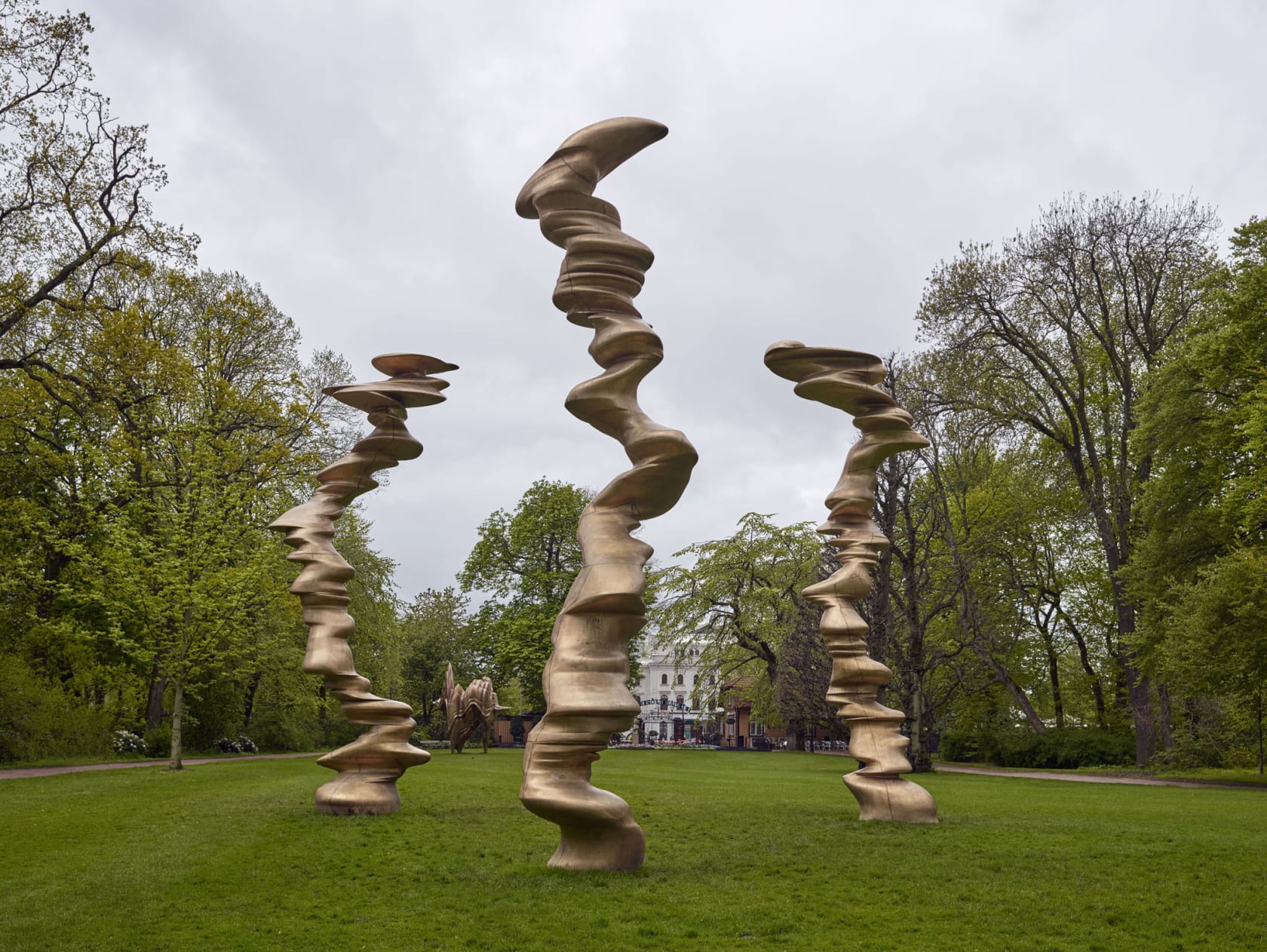
‘Containers as metaphors for the body’ – Tony Cragg
Tony Cragg
The human figure being the prime example of something that looks ultimately organic eliciting emotional responses, while being fundamentally an extremely complicated geometric composition of molecules, cells, organs and processes. His work does not imitate nature and what we look like, rather it concerns itself with why we look like we do and why we are as we are.
https://www.lissongallery.com/artists/tony-cragg
Tony Cragg “Pair” – 2018
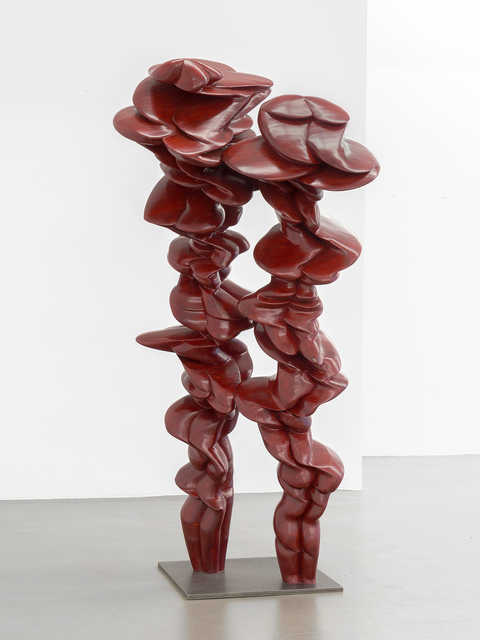
Tony Cragg
“Points of view” -2013
Julian Opie
“The process of reading things as simulations but knowing at the same time that they are real is quite central to my work.”
Julian Opie
Of “Tina”, Opie has described the sculpture as “A contemporary setting but an ancient solution…Part drawing, part sign, the extruded line stands three meters tall…Tina stands as a sentinel, a monolithic statue overseeing the arrivals and guarding the premises.”
https://www.julianopie.com/texts/katei-gaho-magazine-2019

“Tina” 2018
Auto paint on aluminium, 300 x 124.3 x 44 cm
“Peeing Boy” 2012

LED double sided monolith and gold-leafed black granite, 130 x 140 x 34 cm
Thomas Schutte
Through his work he explores the human condition, offering a critical perspective on social, cultural, and political issues and visually eloquent commentary on memory, loss, and the difficulty of memorializing the past.
https://www.artsy.net/artist/thomas-schutte
Thomas Schutte “Efficiency Men” – 2005

Thomas Schutte United Enemies – 2011
Isa Genzken
“I have always said that with any sculpture you have to be able to say, although this is not a ready-made, it could be one,”
According to David Zwirner, “Genzken interrogates the way in which common aesthetic styles come to illustrate and embody contemporary political and social ideologies.”
“Schauspieler (Actors)” 2013
https://www.davidzwirner.com/artists/isa-genzken/biography
Sarah Lucas
Over the past thirty years, Lucas has created a distinctive and provocative body of work that subverts traditional notions of gender, sexuality, and identity. Since the late 1980s, she has transformed found objects and everyday materials such as cigarettes, vegetables, and stockings into disorienting, confrontational tableaux that boldly challenge social norms. The human body and anthropomorphic forms recur throughout Lucas’s works, often appearing erotic, humorous, fragmented, or reconfigured into fantastical anatomies of desire.
https://www.newmuseum.org/exhibitions/view/sarah-lucas
Sarah Lucas
“Spread Yourself Little Table” – 2005

Sarah Lucas “Realidad” – 2012
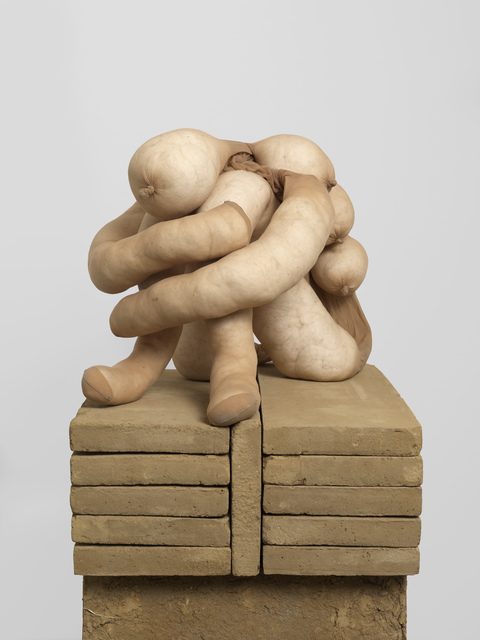
Atmospheres Research
And Peter Zumtor:
The Utroba womb cave in Bulgaria, presents itself as a natural phenomenon of mother nature. The reality is different. A visit up the mountain on a now known tourist trekking site will reveal to you that it is human made, some 3000 years ago in the Thracian era. Built with a goddess of fertility in mind, the recent rediscovery of the cave has led to visitors from all over the world, including those who wish to have children but have yet to be successful in conceiving. A natural and an almost organic space to create atmosphere within appeals to me in the same way that it may appeal to people who visit the cave in search of alternative therapies over (or combined with) modern science. Utroba is located in theEastern Rhodopes mountains near the village of Nenkovo. From extensive research, those that are most concerned with the geography and geometry of the cave also document its position astrologically and then astronomically along with other methods.T his suggests it is of some importance to those seeking this information. The inclusion of such details also determines that the site along with the structure are connected to the belief system that it can aid fertility. This makes this space spiritual and I think that it is pertinent to be aware of this, as expectation is placed upon you to find it special before you see it. In terms of the journey to the site, a lot of physical effort is required of you to arrive at the foot of the cave. The route includes a steep incline for about an hour and various shelter points in small caves for resting. The final stage of the journey is completed only by climbing the ladder to the entrance of the cave, which is shaped like a vulva.At face value, the cave is a short and dense space surrounded by thick forestry within the mountains and comprising of an entrance 3 metres in height and 2.5 metres wide. But appearances can be deceiving. As you enter the passage, walking through its many grooves, and uneven rocky terrain you realise its depth. According to some, it is 22 metres long. At the deepest part of the cave, you will find cervix-shaped altar, raised 1.5 metres off the ground. The exact positioning of this point has been considered and carefully carved so that the aperture from where you entered penetrates the space with a phallic shaped beam of light that only reaches the altar at 12 midday. This precision documentation of time, physical form and light create an atmosphere that is as compatibly relatable to us as it would have been to the people who built it. Utroba’s atmospheric qualities of light, materiality and colour are the constants from which I will use to deconstruct, intervene and reconstruct; manipulating these elements to create a new atmosphere within. My primary interest is to evoke the sensation of movement within the cave, mirroring the real-life form from which it was inspired. Secondly, I am concerned with the inviting nature of the imagery and how unlike many enclosed spaces that are dark in parts, the womb cave is welcoming. This is because the way the light is cast in the cave throughout the day allows you to see all the way to the end, making it less hostile. The colours of the cave are earthy white stones marbled with natural reds and greens and surrounded by more green forestry. The materiality is also non-threatening, whilst stone and rock are rough, the carving of it has softened it.
Critically understanding Invisible Cities
Chapter 02
Do Marco Polo and Kublai Khan see the past differently?
Marco Polo sees the past for what it is but tells Kublai Khan what he wants to hear where as Kubali Khan hears only what he wants and disregards what it is. When looking backwards Khan enquires about a traveller looking into the past: ‘Journeys to relive your past?” or “recover your future?” but Polo says “Elsewhere us a negative mirror. The traveler recognizes the little that is his, discovering the much he has not had and will never have.” (p.25)
How does memory relate to seeing a new city? Do we see things in relation to what we have seen before?
We see things in relation to what we have seen before to some extent. But Calvino mostly talks about the memories Polo fills in from seeing the unseen. “Arriving at each new city, the traveller finds again a past of his that he did not know he had: the foreignness of what you no longer are or no longer possess lies in wait for you in foreign, unpossessed places.” (p.24)
The present form of the city of Maurilia is constantly compared to how it was in the past, it can only be experienced by looking at old postcards. Why do we compare old and new? Why do we often think the past is better?
We compare old and new because we want to show a mark of improvement and progression. The notion of nostalgia and romanticising anything in the past connects to the process of establishing a point where ideals decreased and returning or resetting to a previously successful point. In today’s world old is often favoured for its simplistic processes. What we really identify with is the traditional values that accompany it that may have filtered through to our own time. In essence, preference to the past is a celebration of a revived idea in its concentrated and original form. In the case of Maurilia, tradition is of value: “At times even the names of the inhabitants remain the same, their voices’ accent, and also the features of the faces; but gods who live beneath the names and above places have gone off without a word and outsiders have settled in their place.” (p.26)
Do we all have our own individual perception of a place or city? Are there some things that we always see the same, and others that never can be? Can you link this to Fedora?
Fedoras’ description of an almost endless combination of perspectives of the city within globes is a reflective metaphor for how key elements that influence our perception of a city mean different things for different people and as such are prioritised accordingly, shaping our vision. Of course if limited experiences of cities are available, groups of people can be fed the same imagery through story telling, text and images. (p.28)
Why do you think Zenobia is built on stilts? Is this a vernacular style of building? Or, does it express something else about the people who live there?
Zenobia on stilts reasoning is unknown according to the author. There is a loose exploration and attempt to find the reason but then the focus of importance shifts… it simply doesn’t matter why. It is important to acknowledge that the versatility of the architecture is what has set it apart from other cities- it’s structural design elements offer a certain way of lifestyle and wellbeing “But what is certain is that if you ask an inhabitant of Zenobia to describe his vision of a happy life, it is always a city like Zenobia that he imagines…” (p.30) The way the inhabitants through time can adapt and reutilise the space give it continued success as a thriving city, the stilts are merely the starting point from which generations have continued to build on.
When goods are traded between different cities and countries, what else is swapped at the same time? Think about this in relation to Euphemia.
The material goods that are traded between cities and countries today are an endless list. In the case of Euphemia, the selected goods describe paint a picture of wealth and speciality. In the modern world, mass shipment and easy availability has devalued the meaningful value of goods and materials. The “cargo of ginger and cotton, will set sail again, its hold filled with pistachio nuts and poppy seeds, and the caravan hat has just unloaded sacks of nutmegs and raisins is already cramming its saddlebags with bolts of golden muslin for the return journey.” (p.31)
Page 33 — Why are words not always the best way to describe a place? If you go to a foreign city are there other types of language you can use to communicate?
The communication method Polo used early on was initially limiting for himself and the emperor but as time went by, there was an appreciation of value in the basic information. People like to feel intelligent and not having all the information gives them space to form some of the picture. Whilst Polo’s efforts to learn the language and introduce the words, the beauty “lost in translation” is now ugly, factual and implicit. “… a void not filled with words. The descriptions of cities Marco Polo visited had this virtue: you could wander through them in thought, become lost, stop and enjoy the cool air or run off.”
Chapter 03
How is chapter three different to the preceding chapters? Has a new theme been introduced?
The emperor has noticed the similarities in Polo’s descriptions of the cities. He then dismantles the elements and regurgitates them back to him as a test. The theme of dreams has been introduced with a conceptual idea that they reveal desires and deception. “ Cities, like dreams, are made of desires and fears, even if the thread of their discourse is secret, their rules are absurd, their perspectives deceitful, and everything conceal something else.” (p.38)
If cities are the product of collective desire, can this be dark and negative?
Collective desire is something a majority or more than one person wants. If a city is being willed into existence through desire, one would assume that is for the purpose of doing good, (light and positive). For a city to be the product of a negative desire I think it is not a collective desire but a singular. “I have neither desires nor fears,”. (p.38)
Why is water important in the city of Armilla? Is the writer exposing something that is usually hidden?
The water is conveyed in this city as a network that connects everything together, right back to the original inhabitants. The use of mythical creatures could be whimsical fun being poked but is more likely a vehicle to convey the spirit of the city and its personality. The water network described is the life force of the city, and without it no one would live there. “Abandoned before or after it was inhabited, Armilla cannot be called deserted.” (p.42)
In Chloe the inhabitants trade glances but nothing else. Does the same thing ever happen in London?
Yes on the train. Everyone looks momentarily. Then looks away. It has become a practised activity of learn behaviour.
What does the reflected version of Valdrada represent? Is every action and movement unique or is someone else, somewhere in the world, doing the exact same thing as you?
“Each of their actions is, at once, that action and its mirror-image, which possesses the special dignity of images, and this awareness prevents them from succumbing for a single movement to change and forgetfulness.” The reflected version of Valdrada represents the increased value and decreased value of eachothers actions, responding to its counterpart. One is not functioning without the other.
Does the way Marco Polo describes each city tell us about his personality?
Marco Polo’s personality is evident in his descriptive text. The high level of detail indicates a passion for story telling but also deceit. You could describe him as cunning.
Harlow New Town, Housing after WW2
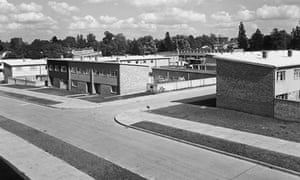
In the documentary video investigating the new town of houses built in Harlow after WW2, the idea of a new way of living. The need to rebuild and reconstruct came out of the destruction of the war and the bombings. At the time of its buildings in 1950s, there were mixed reviews from the public. It was perceived as being built for the working class, focussing on young families, and considered a failure by isolation from their extended families.
Values, Ethics and Consumption
It could be recognised in one of the traditional senses: the regard that something is held to deserve; the importance, worth, or usefulness of something.
“your support is of great value”
Or:
Estimate the monetary worth of. “his estate was valued at £45,000”
A sale of Frank Sinatra’s Gold toilet for $4250. No one would typically pay this for a toilet but the fact that it’s owner was famous gave it additional perceived value.
ARTIST CASE STUDIES: JESSICA
Jana Želibská
Kandarya-Mahadeva (1969/2010–2012)

According to the book: Postwar Italian Art History Today: Untying ‘the Knot’ by Sharon Hecker, Marin Sullivan Bloomsbury Publishing USA, 28 Jun 2018, Želibská’s work is a rejection of the worshiping of idols and mass consumption. The connection here to consumerism could be the use of the female form, that is often used to sell a product or an idea. Use of mirrors obscures the implied genitals and indicates the symbol of self- reflection. Aside from the obvious agenda of using beauty to engage a consumer, there is a similarity in the repeated behaviour of worship which is habitual and the addiction of making a purchase. The same feelings associated with behavioural addiction are tapped into: repetition=familiarity and safety, and feeling good from endorphins from the rush of something new.
Eugène Atget
The French photographer’s focus is on ‘Old Paris’ of which he famously said that he has captured all of it. The artist draws a comparison to the user experience of consuming from the past to the present. A photograph of a clothing store plays with the ambiguous nature of shopping through windows. The glass serves as a division.
Creative writing responding to Invisible Cities
My response to Calvino’s ‘Invisible Cities’ is a commentary on his decision to sexualise each destination city as he named them as a woman. I am interested in conducting a creative writing exercise where I do the same but the opposite. In order to do so, I googled the most attractive men’s names. Here is the article I found: https://www.independent.co.uk/life-style/the-hottest-names-that-will-get-you-the-most-dates-a6733041.html It was important for me to not change the order of which the male names are listed, to place importance of one over the other. The start point for the journey I selected was Florence, (Brett), departing at the harbour of San Marino, (Tyler), and passing Zadar (Corey), Pescara (Andy) and Split (Noah) down the Adriatic Sea to Dubrovnik (Rob). From here, the journey continues on land through Montenegro (Zach, and the only country and not city named) and finally the Womb cave in Bulgaria, (Brandon). As I am still developing the atmosphere, I would like to create in this cave for my studio practise, it is important to me to not determine what this will be and to keep it elusive. To do this, I considered the poem by CP Cavafy: Ithaka, which places precedence on a journey over a destination:
As you set out for Ithaka
hope your road is a long one,
full of adventure, full of discovery.
Laistrygonians, Cyclops,
angry Poseidon—don’t be afraid of them:
you’ll never find things like that on your way
as long as you keep your thoughts raised high,
as long as a rare excitement
stirs your spirit and your body.
Laistrygonians, Cyclops,
wild Poseidon—you won’t encounter them
unless you bring them along inside your soul,
unless your soul sets them up in front of you.
Hope your road is a long one.
May there be many summer mornings when,
with what pleasure, what joy,
you enter harbors you’re seeing for the first time;
may you stop at Phoenician trading stations
to buy fine things,
mother of pearl and coral, amber and ebony,
sensual perfume of every kind—
as many sensual perfumes as you can;
and may you visit many Egyptian cities
to learn and go on learning from their scholars.
Keep Ithaka always in your mind.
Arriving there is what you’re destined for.
But don’t hurry the journey at all.
Better if it lasts for years,
so you’re old by the time you reach the island,
wealthy with all you’ve gained on the way,
not expecting Ithaka to make you rich.
Ithaka gave you the marvelous journey.
Without her you wouldn’t have set out.
She has nothing left to give you now.
And if you find her poor, Ithaka won’t have fooled you.
Wise as you will have become, so full of experience,
you’ll have understood by then what these Ithakas mean.
In the end, the outcome of this exercise was determined by my use of masculine adjectives that steered the once male gaze into a female one. A map illustrates my thought process, systematically renaming cities and countries with a thoughtless approach. The feeling for me is of a woman making her way from one man to the next with the same perceived lack of concern that has been stereotyped of men for centuries.
The destination of Brett is departed as frequently as you arrive to it. As you leave, you do so with a small piece of you left behind, for it is a place of beauty that you one day hope to return to.
The hoarse crash of its waves at high tide along the noble river are a force of strength and power, determined to guide you out onto your course. As a visitor the price you have paid in leaving part of you, is like many who have bejewelled the bridge from under which you proceed.
For Brett is virile with wondrous culture of craftsmanship and architecture. Fearless palaces of fine arched carved stone house prized works for your spectating and ogling.
The city teases you on your visit, allowing you to believe that you are a part of the bold and handsome properties it possesses in the monument describing the perfect man, according to some. The gallant form of Brett stands proud above all those who come to view it and admire its muscular structure and never wavering stately presence.
To say goodbye to the city is say farewell to a hero of architectural charisma and charm. And you hope it is just for now and not forever.
Setting sail out of its strong embrace you face an uncertain future journey ahead: there is stormy water awaiting you, past a vast canal of ferocious sea. As you reach the shore from which you depart, Brett is long out of sight but still in your mind.
You sail from Tyler full of sorrow knowing that the ports of Corey, Andy and Noah will offer you no comfort in the light of Brett. As you approach the canal opening, Shane and Jeffrey steer you into the safety of Rob’s harbour.
The journey is not over, and it is about to get more testing for you, as you have no choice but to abandon your crew, discard what you can and make light to endure the mountainous climb over Frank’s audacious elevations. The mountains are a rough and hostile territory so different from the city you left that it is a struggle for the traveller to believe he was even there- it is now a distant dream.
Frank sets you free to cross the lush green landscape of Zach where the people are welcoming and fascinated by this exotic visitor. As you persevere on, now ever determined to arrive, your path to Brandon has begun. Brandon is a destination like no other. On the incline to the hollow space, your energy is depleted and challenged. The climb is your challenge and arriving is the reward. Brandon is a space of utmost calm and zen. To be near Brandon is to see the hand of man achieve sculpture that you thought was God’s doing. It is to question the power and sheer lion-hearted will of men some three thousand years before us.
And as you enter Brandon, your sense of stress from your long commute is rewarded with a feeling of peace as a feast for your eyes lies below you. You may have arrived at your destination, and much like the sensation of looking out on a beautiful view being destroyed by terrible weather from the comfort of your warm home, you realise that it was more about the journey you endured than the destination as achievement washes over you, looking back from where you came.
Atmospheres research at the Tate Britain
Luis Tomasello- Chromoplastic Atmosphere No.710 (1992)

This work was not available for public viewing at the Tate Britain however I felt it to be relevant enough to include within my research.
Atmospheres is in the title of the work which is an acrylic relief painting on wood. First impressions of the work draw me to the shapes, textures and form of the work which is in many ways perfectly dull and unimagined. There are simple references to the Golden section, however squashed or condensed. Playing with geometrics and relief Tomasello has created a hierarchy to describe illusions of light in dark materials. He is challenging the norm of using white as a symbol of light through reflective black “chromoplastic’ as an alternative medium to discuss light as an atmospheric quality. In this respect, the artist has designed an atmosphere of opposites.
John Singer Sargent, Carnation, Lily, Lily, Rose (1885-6) Atmosphere No.710 (1992)

Both the subjects and the content are contributors to the kind of atmosphere that is described through memory and nostalgia. To learn that inspiration that came for the painting was triggers by the artist from a boat trip is telling of the artist’s interest in the passing of time that can be described through light and colour to demonstrate an atmosphere. In the work, he uses both children to discuss youth and memory and lanterns to talk about the time of day. I was drawn to the work because despite the time difference between when it was painted and now it is a strangely relatable environment. Often when we think about atmosphere, we think of positive conditions we associate with a ‘good’ environment, and this image has many of these to jigsaw together that ideal: childhood, warm sunsets, flowers, and light hearted ritual.
Henry Fuseli, Lady Macbeth Seizing the Daggers (1812, estimated)

Depiction of darkness is as important as how light is described. Walking through a dark space creates a certain feeling of danger and eeriness. Given this work is about a murder in a Shakespeare play, the use of darkness within the work adds to the dark themes that the play conveys. I find it clever how the artists has used muted colours that are often only the ones visible to the human eye in darkness, rather than just paint typical fully saturated day light colours. The way he has blurred them is to show how us the viewer will see in this darkness, thus creating an atmosphere where the audience is as much a part of the murder as the subjects.
William Turner, Rome, from the Vatican. Raffaelle, Accompanied by La Fornarina, Preparing his Pictures for the Decoration of the Loggia (1820 exhibited)

Once again light is an imperative element of atmosphere. Turner utilised this attribute portraying natural sunlight sweeping across the Vatican and it is as if he is suggesting heaven. Looking further into the painting, the grand structures of classical architecture are almost lost under and around the sky. Examining the people and the remaining contents of the view point tell you that there is a calmness between the people and the buildings. The sun light has shone down into the buildings below and illuminated them in such a way as if the artist is suggesting a hierarchal status of the subjects in the work. Everything from the colour of the sky, to the unfocused details of the interior corridor draw your focus to the vastness of the sky in a city where religion and art are highly revered.
Unethical design
UX, web and social media:
Snapchat score
Business Insider technology reporter Kif Leswing’s snapchat score. Photo: BI Screenshot
“Consider:
- — Snapchat is a service geared toward teens and young people.
- — It quantifies popularity into a single number, the Snapchat score, which comes up frequently when adding new friends.
- — How Snapchat calculates your score is mostly secret, but it’s roughly the sum of all the messages you’ve sent and received.
- — So the only way to increase your score — and hide how unpopular you actually are — is to use Snapchat more.
The score serves one real purpose: to get people to use Snapchat more.”
Business Insider Published: 8:30pm, 26 May, 2016,Updated: 1:21pm, 27 May, 2016 Accessed 29/09/19 https://www.scmp.com/tech/social-gadgets/article/1955756/snapchat-score-example-unethical-app-design-according-ex-googler

Acknowledgement of problem from Spotify:
“Anyone who works in tech knows the industry has taken a beating in recent years for its perceived lack of morals and careless culture of “move fast, break things.” Companies are starting to realise how much damage has been done to labor markets, privacy, and mental health – and look at how to do things differently going forward.”
https://spotify.design/articles/2019-01-18/designing-for-tomorrow-a-discussion-on-ethical-design/
The Way Unethical Design Hurts people:

User trust and wellbeing get compromised when our design and product decisions cause harm. This harm can be broadly divided into three, overlapping categories:
These can be broadly divided into three, overlapping categories:
- Physical harm – including:
- Inactivity and sleep deprivation, enabled by infinite-scroll feeds, auto-queued videos and other hallmarks of the attention economy.
- Financial strain, resulting from features that eat into data plans or make it incredibly difficult to cancel renewing subscriptions.
- Exploitation of workers in the tech-driven gig economy, which uses ehavioural economics under the guise of “persuasive design” to get people to work longer hours against their own interests.
- Exposure of personally identifiable data – for instance, when features share someone’s exact location with others.
- Accidents due to distraction, especially when people are driving.
2. Emotional harm – including:
- Betrayal of trust or privacy, when people are exploited, exposed, or discriminated against using personal information they thought was private.
- Negative self-image, anxiety & depression – especially amongst young people, whose minds, bodies, and identities are still in development and tend to crave social acceptance.
3. Societal harm – including:
- Political polarization – algorithms flatten the landscape of journalism, drive news agencies to compete through sensationalism, and contribute to a divided society with polarized views and an immaterial grasp on reality.
- Exclusion – for instance, when designers fail to develop features sensitive to the experiences of LGBTQ users, consider accessibility for those with mental and physical disabilities and recognise the importance of legible text to older users.
Reinforcing stereotypes and structural oppression – due to a growing dependence on algorithms and biased data to classify and make predictions about people.
Myspace top 8:
Therapist and Wu Wei Wisdom practice founder, David James Lees, told me: ‘Any ranking or a hierarchical system like this promotes a comparing, judgemental, critical and unhealthy environment. It’s OK momentarily if you’re in the top eight and rising… but what happens when you’re not?
Twitter: https://twitter.com/MetroUK | Facebook: https://www.facebook.com/MetroUK/
Ethical design

But ethical design means users must be able to define their relationship with a platform — not the other way around. This could mean selecting what sort of notifications they want to receive, or choosing to receive tailored product recommendations. Mastodon uses a chronological timeline that displays posts in the order in which they were created, and gives users greater control over what content they see and when. “We need to have more fine-grain control over what we see on these sites, and the best way to do that is to allow us to opt into things,” Kalbag says. “Platforms should have sensible, privacy-respecting default settings.”
https://theweek.com/articles/799415/quest-design-ethical-social-media-platform
Instagram 2016 Algorithm

“The new algorithm creates a popularity contest between creators, so that they resort to unethical business decisions in order to keep themselves at the top of the food chain.”
Unscrupulous creators started buying followers, likes and comments in an attempt to fool the algorithm; as Instagram clamped down on that, Hui says, those users formed secret “comment pods” conspiring to share “each and every post with each other in order to generate ‘authentic’ and immediate engagement”.
“Among users I spoke to, one event was cited time and again: the introduction, in mid-2016, of Instagram’s algorithmic timeline. It was one of the largest changes to the platform since it was bought by Facebook in 2012. Rather than presenting users with a cross-section of what the people they were following were up to at any given moment, Instagram began populating feeds with the most noteworthy posts from those accounts, often reaching back days or even weeks to pull in particularly compelling content. In effect, the service began promoting a curated, unrealistic version of an already curated, unrealistic feed.
 Jessica Rosaleen Broughton